 c8db4bbdc3
Co-authored-by: Cursor <cursoragent@cursor.com>
SpatialHub



Technology Stack and Features
- ⚡ FastAPI for the Python backend API.
- 🧰 SQLModel for the Python SQL database interactions (ORM).
- 🔍 Pydantic, used by FastAPI, for the data validation and settings management.
- 💾 PostgreSQL as the SQL database.
- 🚀 React for the frontend.
- 💃 Using TypeScript, hooks, Vite, and other parts of a modern frontend stack.
- 🎨 Tailwind CSS and shadcn/ui for the frontend components.
- 🤖 An automatically generated frontend client.
- 🧪 Playwright for End-to-End testing.
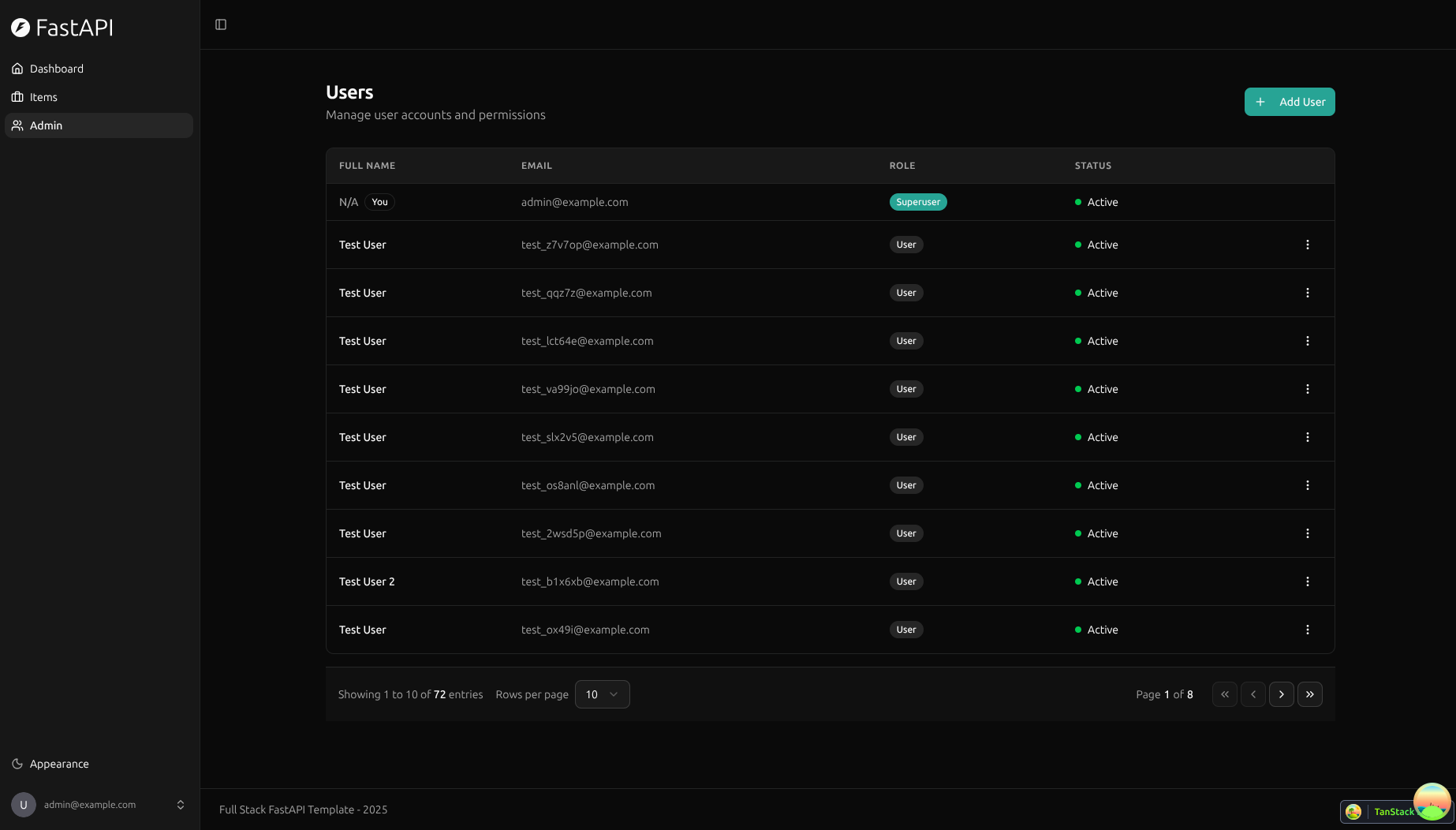
- 🦇 Dark mode support.
- 🐋 Docker Compose for development and production.
- 🔒 Secure password hashing by default.
- 🔑 JWT (JSON Web Token) authentication.
- 📫 Email based password recovery.
- 📬 Mailcatcher for local email testing during development.
- ✅ Tests with Pytest.
- 🚢 Deployment instructions using Docker Compose.
- 🏭 CI (continuous integration) and CD (continuous deployment) based on GitHub Actions.
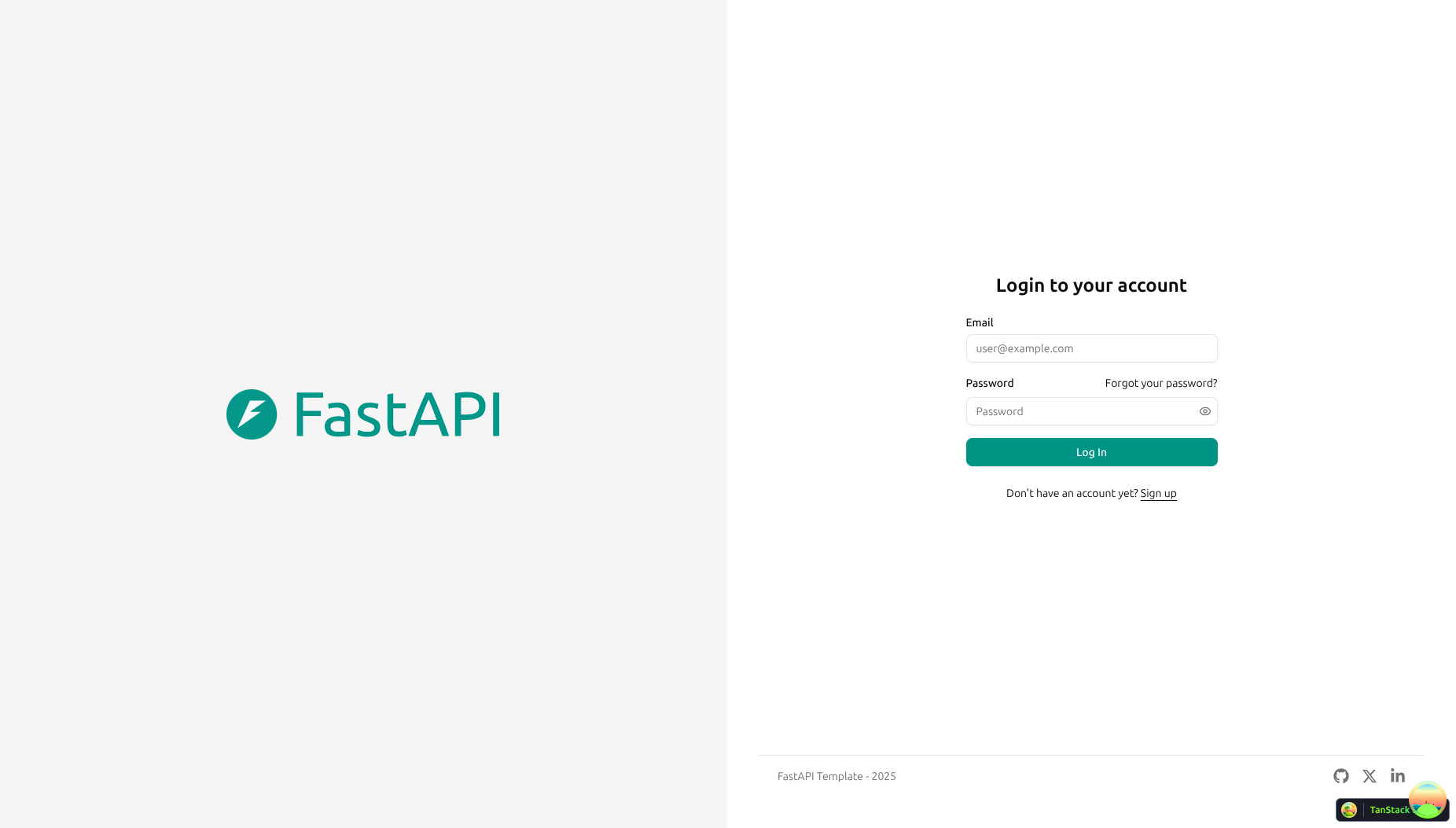
Dashboard Login
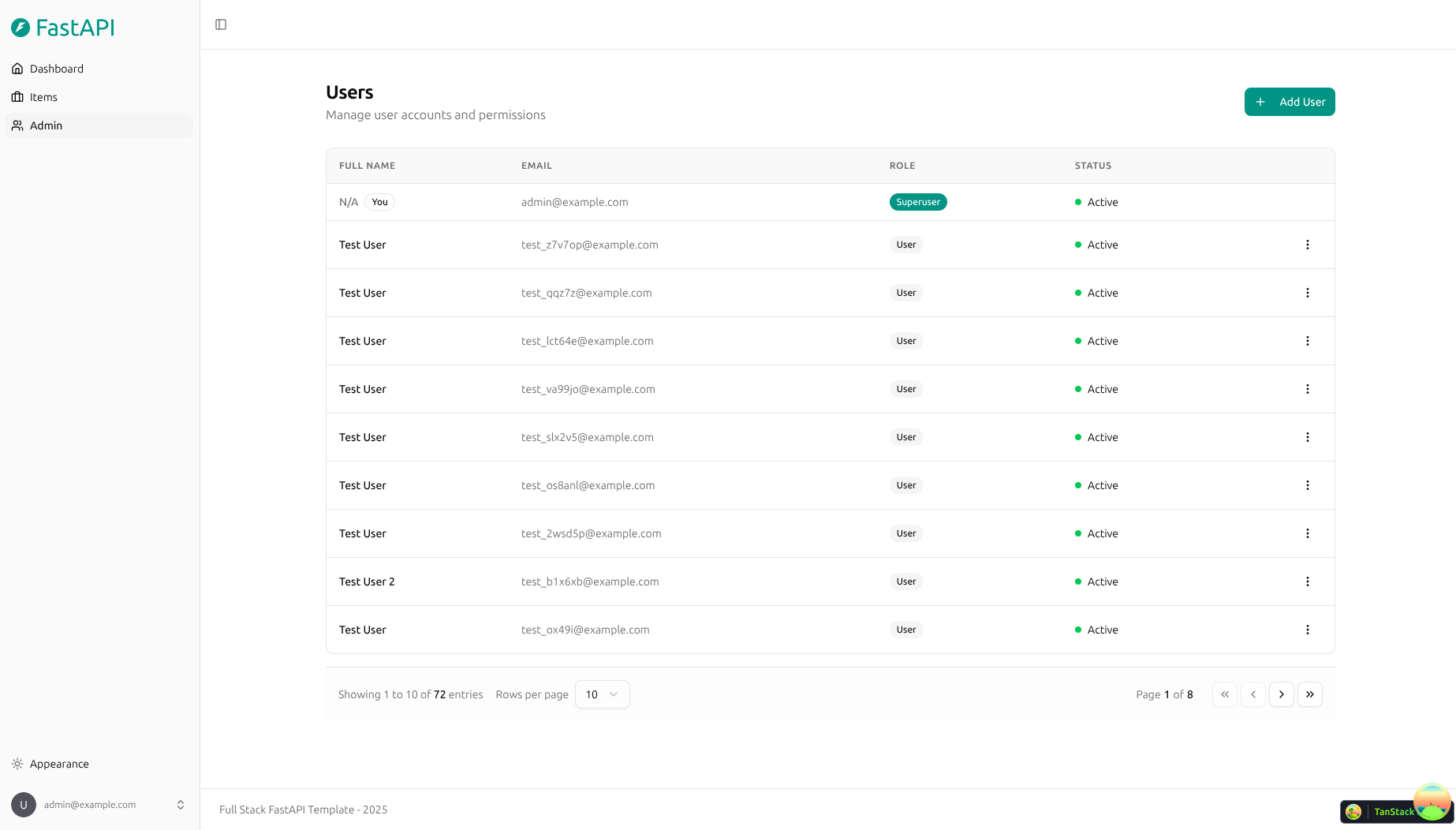
Dashboard - Admin
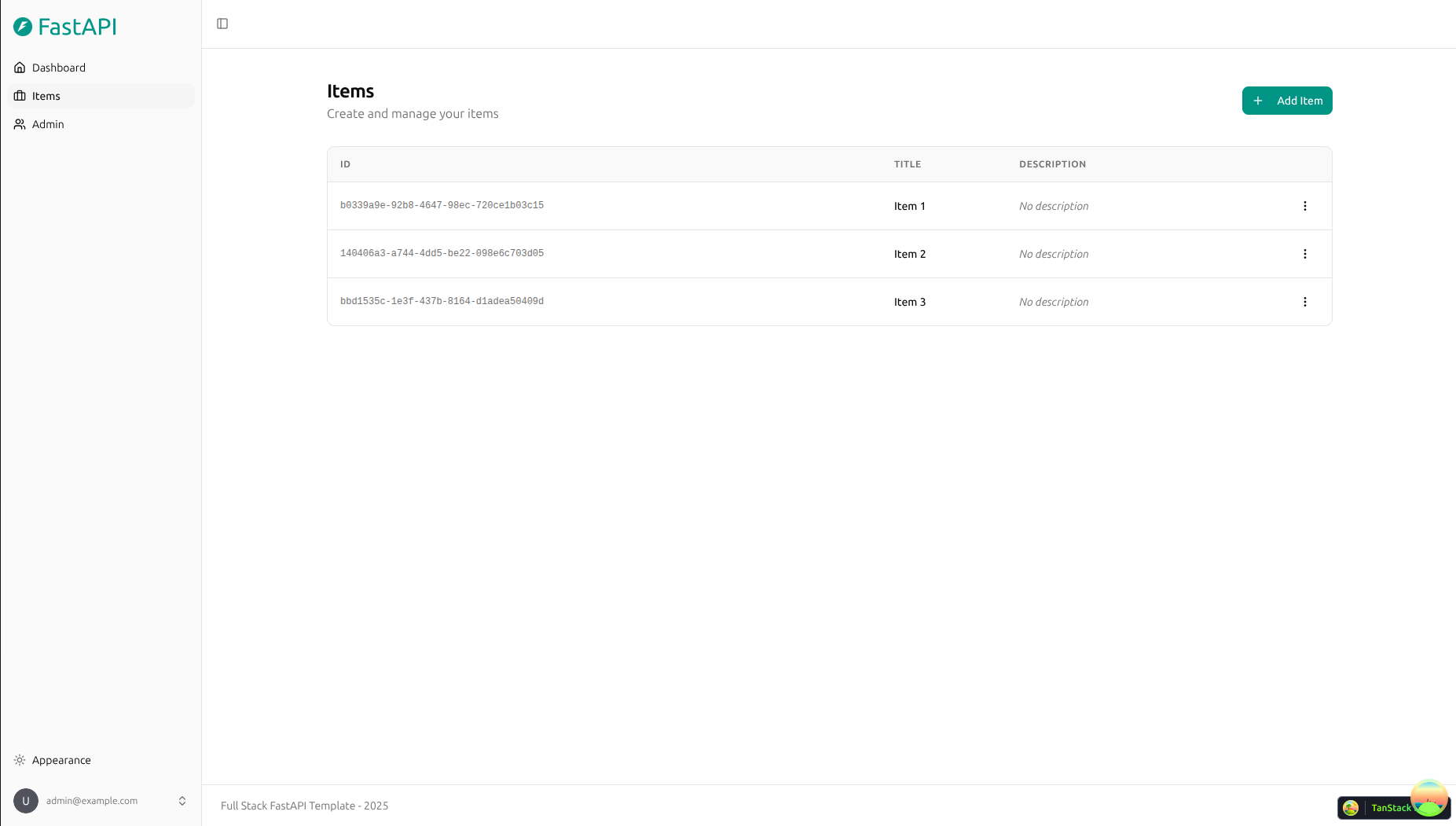
Dashboard - Items
Dashboard - Dark Mode
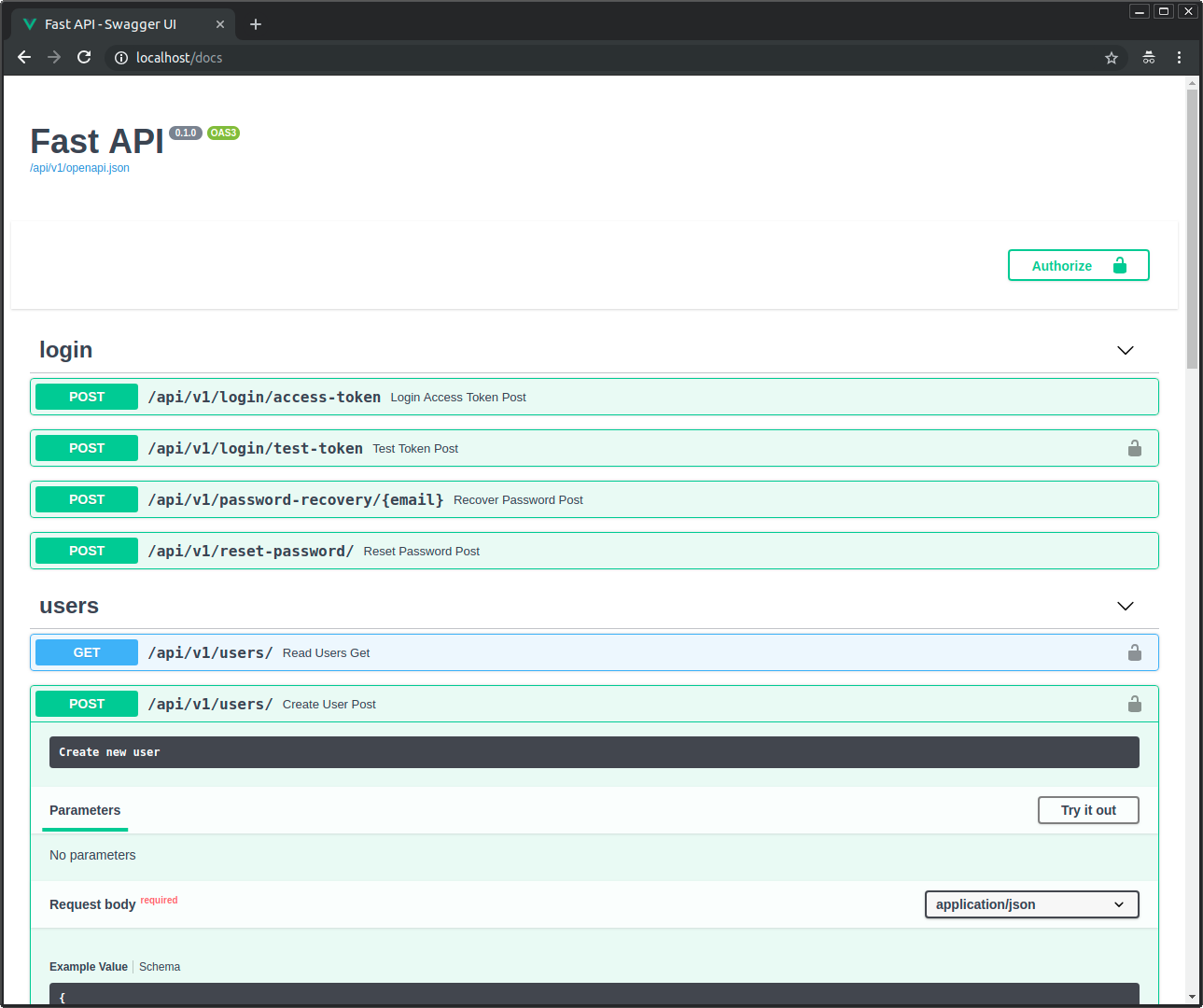
Interactive API Documentation
How To Use It
You can just fork or clone this repository and use it as is.
✨ It just works. ✨
How to Use a Private Repository
If you want to have a private repository, GitHub won't allow you to simply fork it as it doesn't allow changing the visibility of forks.
But you can do the following:
- Create a new GitHub repo, for example
my-full-stack. - Clone this repository manually, set the name with the name of the project you want to use, for example
my-full-stack:
git clone git@github.com:fastapi/full-stack-fastapi-template.git my-full-stack
- Enter into the new directory:
cd my-full-stack
- Set the new origin to your new repository, copy it from the GitHub interface, for example:
git remote set-url origin git@github.com:octocat/my-full-stack.git
- Add this repo as another "remote" to allow you to get updates later:
git remote add upstream git@github.com:fastapi/full-stack-fastapi-template.git
- Push the code to your new repository:
git push -u origin master
Update From the Original Template
After cloning the repository, and after doing changes, you might want to get the latest changes from this original template.
- Make sure you added the original repository as a remote, you can check it with:
git remote -v

origin    git@github.com:octocat/my-full-stack.git (fetch)
origin    git@github.com:octocat/my-full-stack.git (push)
upstream    git@github.com:fastapi/full-stack-fastapi-template.git (fetch)
upstream    git@github.com:fastapi/full-stack-fastapi-template.git (push)
- Pull the latest changes without merging:
git pull --no-commit upstream master
This will download the latest changes from this template without committing them, that way you can check everything is right before committing.
-
If there are conflicts, solve them in your editor.
-
Once you are done, commit the changes:
git merge --continue
Configure
You can then update configs in the .env files to customize your configurations.
Before deploying it, make sure you change at least the values for:
SECRET_KEYFIRST_SUPERUSER_PASSWORDPOSTGRES_PASSWORD
You can (and should) pass these as environment variables from secrets.
Read the deployment.md docs for more details.
Generate Secret Keys
Some environment variables in the .env file have a default value of changethis.
You have to change them with a secret key, to generate secret keys you can run the following command:
python -c "import secrets; print(secrets.token_urlsafe(32))"
Copy the content and use that as password / secret key. And run that again to generate another secure key.
Backend Development
Backend docs: backend/README.md.
Frontend Development
Frontend docs: frontend/README.md.
Deployment
Deployment docs: deployment.md.
Development
General development docs: development.md.
This includes using Docker Compose and .env configurations.
Release Notes
Check the file release-notes.md.
License
The SpatialHub is licensed under the terms of the MIT license.